10 Types of Corporate Videos Businesses Use (With Examples)
Corporate video is not a single format, it is a category that spans dozens of applications, from sixty-second social media clips to multi-chapter documentary productions. Businesses that understand the full range of types of corporate videos available to them are far better positioned to use video strategically, rather than treating it as a one-off marketing exercise.
In this guide, we cover the 10 most effective types of corporate videos used by businesses across Malaysia and the wider region. What each one does, when it works best, and real examples of the format in action.
1. Corporate Profile Video
What it is: A corporate profile video (sometimes called a company introduction video) is a comprehensive overview of your organisation: who you are, what you do, your values, your people, and your capabilities.
What it's used for: New client pitches, investor presentations, trade fair introductions, website hero sections, and corporate tender submissions.
What makes it work: The most effective corporate profile videos balance concrete data (company size, production capacity, years in operation) with human storytelling (founding story, team culture, client relationships). The goal is to make a prospective client or investor feel confident in your business before they've met you in person.
Best length: 2–4 minutes for a comprehensive version; 60–90 seconds for a condensed social media cut.
Who uses this: Manufacturing companies, engineering firms, professional services firms, construction companies, and any B2B organisation that regularly presents to new clients or institutional buyers.
2. Brand Story Video
What it is: A brand story video goes deeper than a company profile. Where a profile answers what your company does, a brand story answers why it exists. The founding motivation, the values that drive decisions, and the vision your company is working towards.
What it's used for: Brand positioning, premium market entry, corporate rebranding launches, and employer branding campaigns.
What makes it work: Authenticity. Brand story videos that feel scripted or corporate rarely land. The most effective ones feature real people: founders, long-serving team members, clients. Speaking in their own words about what the company means to them.
Best length: 2–4 minutes.
Who uses this: Companies differentiating on values rather than price, premium brands, companies undergoing rebranding, and organisations competing for talent in competitive industries.
3. Testimonial Video
What it is: A testimonial video features real clients or partners speaking about their experience working with your company, addressing common purchase objections and providing third-party validation of your claims.
What it's used for: Sales enablement, proposal support, website social proof sections, and LinkedIn content targeting decision-makers at similar companies.
What makes it work: Specificity. The most compelling testimonials are not generic praise, they describe a concrete problem, the solution your company provided, and a measurable or tangible outcome. "They delivered the full production in three weeks and it exceeded what we expected" lands far harder than "they were great to work with."
Best length: 60–90 seconds per subject; 2–3 minutes for a multi-client compilation.
Who uses this: Virtually every B2B company. Testimonial videos are one of the highest-ROI corporate video formats because they are reusable across sales, marketing, and digital channels simultaneously.
4. Product or Service Demo Video
What it is: A product or service demo video demonstrates how your offering works. Showing its features, applications, and value in a way that is faster and more engaging than a brochure or data sheet.
What it's used for: Sales presentations, e-commerce or website product pages, trade exhibitions, and distributor or channel partner training.
What makes it work: Showing, not telling. The strongest demo videos focus on what the product or service achieves for the user, not just its technical specifications. For complex B2B products such as industrial equipment, software platforms, specialised services, video is often the only format that can communicate the value proposition clearly without requiring an in-person demonstration.
Best length: 60–180 seconds for a focused demo; longer for complex multi-feature products.
Who uses this: Technology companies, industrial equipment manufacturers, SaaS businesses, and any company selling a product where the value is in how it works, not just what it is.
5. Explainer or Animated Video
What it is: An explainer video uses animation, motion graphics, or a combination of live-action and graphics to explain a concept, product, service, or process that would be difficult to demonstrate visually in the real world.
What it's used for: Simplifying complex propositions, onboarding new clients, website landing pages, investor pitches for abstract or technology-driven businesses.
What makes it work: Clarity and pace. The best explainers take a single, complex idea and break it down into a narrative that a non-specialist can follow within 90 seconds. Animation removes the constraints of real-world filming, anything can be visualised, which makes it especially powerful for services, software, data-driven businesses, and supply chain or process explanations.
Best length: 60–120 seconds.
Who uses this: Fintech companies, logistics businesses, healthcare providers, software companies, and any organisation whose core value proposition is abstract or technical.
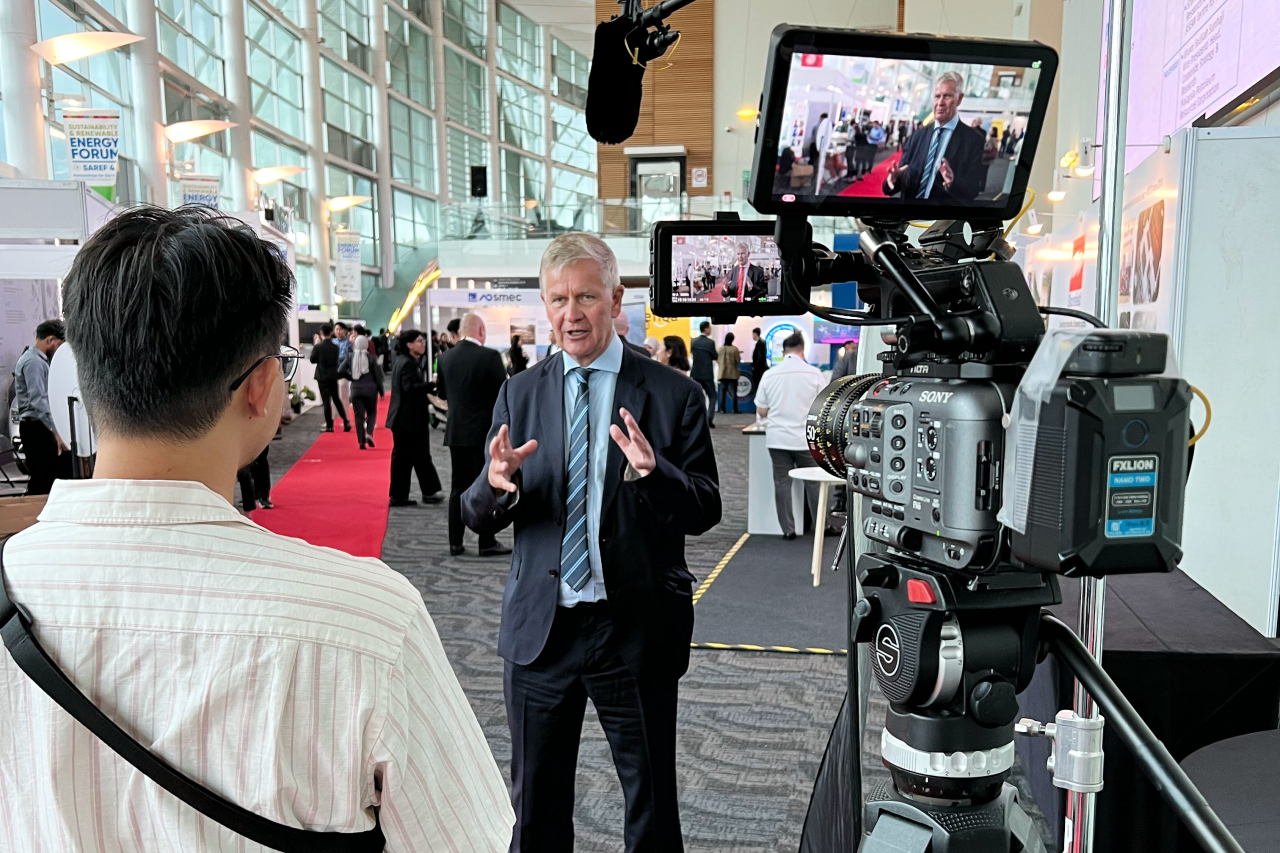
6. Corporate Event Video
What it is: A corporate event video documents a company event such as annual dinner, product launch, conference, awards ceremony, factory opening, or corporate retreat. Producing a highlight film that captures the energy and significance of the occasion.
What it's used for: Internal communications, LinkedIn content, investor updates, talent attraction, and building a long-term archive of company milestones.
What makes it work: Capturing moments that feel significant, not just comprehensive. The best event videos are editorial, they select the moments that tell a story, rather than simply recording everything that happened. A Same Day Edit (SDE), delivered on the day of the event itself, is a particularly high-impact format for gala dinners and large-scale launches.
Best length: 2–3 minutes for a highlight film; 5–10 minutes for a full documentation.
Who uses this: Companies of all sizes. From SMEs celebrating their first major milestone to listed companies documenting their annual general meetings.
7. Recruitment Video
What it is: A recruitment video communicates your company culture, employee experience, and workplace environment to prospective hires, making the case for why your company is a place worth working.
What it's used for: Job postings, LinkedIn employer branding campaigns, university career fairs, and graduate recruitment programmes.
What makes it work: Real employees speaking honestly about their work experience. Produced recruitment videos that feel staged or overly polished tend to underperform because candidates are perceptive. They can tell the difference between a genuine employee testimonial and a scripted performance. The production quality should be high, but the content should feel human.
Best length: 60–180 seconds.
Who uses this: Any company competing for talent in a tight labour market, particularly relevant in Malaysia's technology, engineering, finance, and professional services sectors.
8. Training and Internal Communications Video
What it is: Training videos deliver instructional content to employees in a consistent, scalable format. Internal communications videos convey messages from leadership such as company updates, policy changes, cultural direction, in a more engaging way than email or printed memos.
What it's used for: Employee onboarding, health and safety training, compliance education, process documentation, and leadership communications.
What makes it work: Clarity and structure. Training videos need to be organised, well-paced, and easy to reference repeatedly. Internal communications videos benefit from a personal, direct tone, leadership speaking to camera, rather than presenting slides.
Best length: Varies widely — 3–10 minutes for training modules; 2–5 minutes for leadership communications.
Who uses this: Large companies with distributed workforces, manufacturing and industrial businesses with safety-critical processes, and any organisation that needs to train staff at scale and consistently.
9. CSR and ESG Video
What it is: A CSR (Corporate Social Responsibility) or ESG (Environmental, Social, and Governance) video documents a company's real-world impact such as community programmes, environmental initiatives, employee welfare, ethical sourcing, and sustainability commitments.
What it's used for: Investor relations, annual reports, institutional client pitches, ESG compliance submissions, and public reputation management.
What makes it work: Authenticity and specificity. CSR videos that feel like marketing spin (broad claims without evidence) can do more harm than good. The most effective ones show real projects, real beneficiaries, and real numbers. In Malaysia, where ESG requirements are increasingly built into procurement criteria for GLCs and listed companies, this type of video has shifted from optional to strategic.
Best length: 2–4 minutes for formal reporting use; 60–90 seconds for social media.
Who uses this: Publicly listed companies, companies supplying to GLCs or MNCs with ESG procurement requirements, and organisations that want to attract impact-conscious investors or employees.
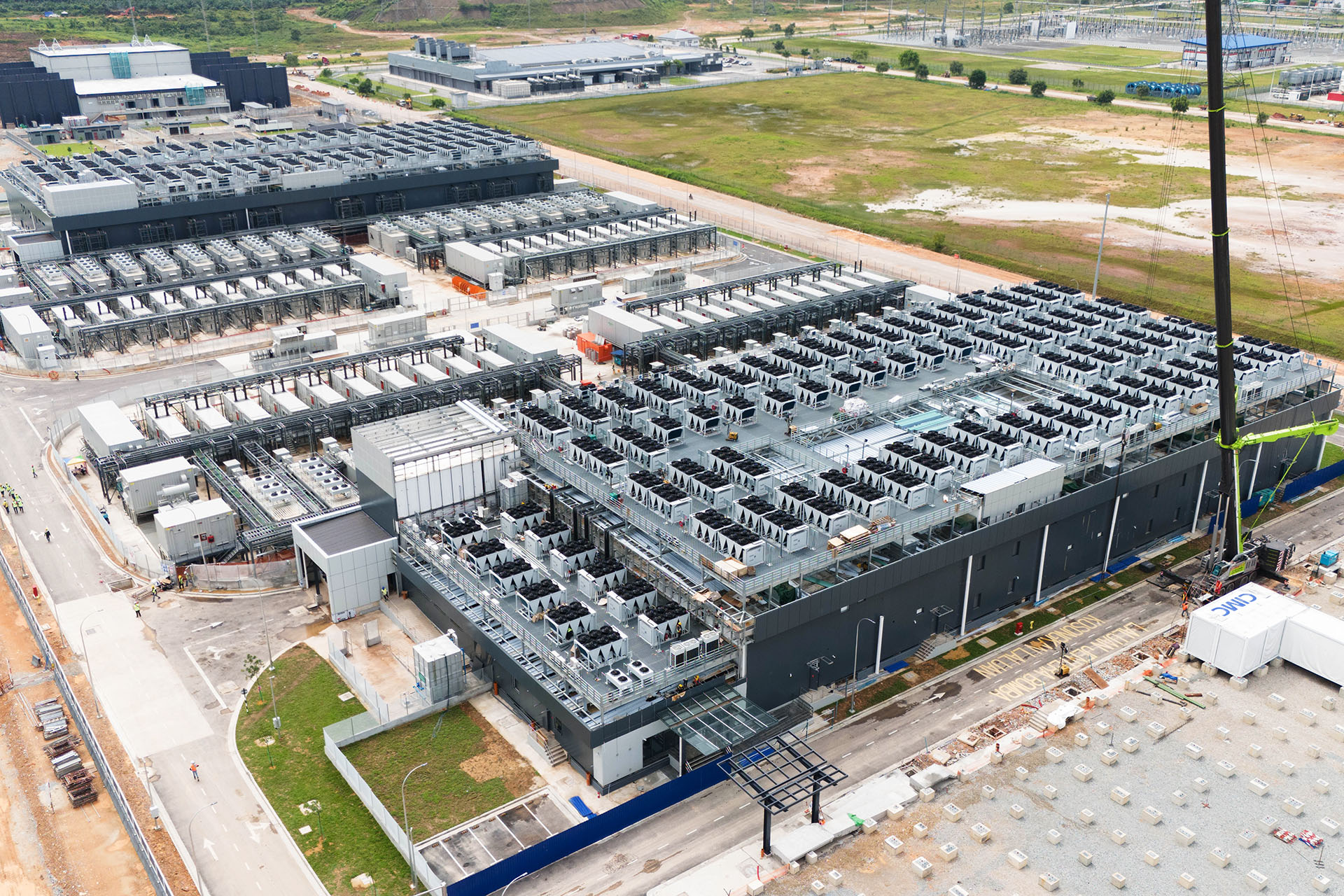
10. Construction Progress and Documentation Video
What it is: A construction progress video documents a building or infrastructure project from groundbreaking to completion, using a combination of ground-level milestone footage, aerial drone shots, and long-term timelapse photography.
What it's used for: Client reporting, investor updates, capability demonstrations to future clients, and marketing for construction companies, developers, and engineering firms.
What makes it work: Continuity and scale. A well-executed construction progress video does something no other format can, it compresses months or years of physical transformation into a format a viewer can absorb in minutes. For construction and engineering companies in Malaysia, this type of video has become one of the most powerful tools for demonstrating capability to prospective clients.
Best length: 3–5 minutes for a full project documentary; 60–90 seconds for a highlight cut.
Who uses this: Construction companies, property developers, infrastructure firms, data centre builders, and any company delivering physical projects where the process of delivery is itself a demonstration of capability.
Quick Reference: Which Type of Corporate Video Is Right for You?
| Business Objective | Recommended Video Type |
|---|---|
| Introduce your company to new clients | Corporate Profile Video |
| Communicate your brand values | Brand Story Video |
| Build social proof and close deals | Testimonial Video |
| Demonstrate how your product works | Product / Service Demo Video |
| Explain a complex or abstract concept | Explainer / Animated Video |
| Celebrate and document company events | Corporate Event Video |
| Attract talent and build employer brand | Recruitment Video |
| Train staff at scale and consistently | Training & Internal Communications Video |
| Demonstrate ESG commitment to investors | CSR / ESG Video |
| Showcase a completed project | Construction Progress Video |
FAQ
What is the most common type of corporate video in Malaysia?
The corporate profile video is the most widely produced type of corporate video for Malaysian B2B businesses. It serves the broadest range of purposes — sales, investor relations, tenders, and digital marketing — making it the natural starting point for most companies.
Can one video serve multiple purposes?
To a degree, but purpose-built videos consistently outperform multi-purpose ones. A corporate profile video can serve both investor pitches and client presentations, for example, but a testimonial video is not a substitute for a product demo. Think of each type as a specific tool, the right tool for the right job.
How many types of corporate videos should a business produce?
There is no single answer, but most established Malaysian B2B companies benefit from a core set of three to four: a corporate profile video, one or two testimonial videos, and an event highlight for their most significant annual milestone. Additional formats are added as the content strategy matures.
What is the difference between a brand story video and a corporate profile video?
A corporate profile video communicates what your company does, its capabilities, scale, services, and track record. A brand story video communicates why your company exists, its founding motivation, values, and the vision it is working towards. Both are valuable; they serve different audiences and different moments in the client relationship.
How much do the different types of corporate videos cost in Malaysia?
Costs vary significantly by format and scope. Testimonial videos and recruitment videos at the simpler end can start from RM8,000–RM15,000. Corporate profile videos and brand story films typically range from RM20,000–RM60,000. Explainer and animated videos, and construction progress productions involving long-term timelapse, can range from RM30,000 to RM100,000 and above. See our full corporate video cost guide →
Does Resov Film produce all 10 types of corporate videos?
Yes. Resov Film works across all of the formats covered in this guide, with a focus on B2B corporate video production for companies in Malaysia and the region. Our portfolio spans corporate profiles, brand films, testimonials, event coverage, CSR productions, and construction progress documentation.
Start Planning Your Corporate Video
Understanding the full range of corporate video types is the first step. The next is identifying which format — or combination of formats — is the right investment for your business right now.
Resov Film is a corporate video production company based in Malaysia, working with businesses across manufacturing, construction, finance, technology, and professional services to produce video content that works.
Talk to us about your next production →
Related Reading: